Educational & Mathematical Reference Only · Not Medical Advice
MOTS-c (10mg Vial) Dosage Protocol
MOTS-c is studied in laboratory work on aMPK-linked mitochondrial energy assays. This reconstitution guide shows how much liquid to add to the vial, and which U-100 syringe mark matches a worked amount.
Jump to Section (1–11)
MOTS-c Quick Reference: Vial, Water & Concentration
Vial strength
10 mg freeze-dried powder
Bacteriostatic water to add
2 mL (0.9% benzyl alcohol solution)
Resulting concentration
5 mg/mL (50 mcg per 1 U-100 unit)
Typical schedule and storage
Twice Weekly · Store at 2°C–8°C in a standard UK fridge
MOTS-c Dosage Chart: U-100 Syringe Units (10 mg Vial)
Mixing a 10 mg MOTS-c vial with 2 mL of bacteriostatic water produces a concentration of 5 mg/mL (50 mcg per U-100 unit). On a standard 100-unit (1.0 mL) syringe, a 2000 mcg draw equals 40 units (0.4 mL), giving 5 total draws per vial.
| Target amount | Solution volume | 100-unit (1.0 mL) syringe mark | 50-unit (0.5 mL) syringe mark | 30-unit (0.3 mL) syringe mark | Draws per vial |
|---|---|---|---|---|---|
| 250 mcg (0.25 mg) | 0.05 mL | 5 units | 5 units | 5 units | 40 |
| 500 mcg (0.5 mg) | 0.1 mL | 10 units | 10 units | 10 units | 20 |
| 1000 mcg (1 mg) | 0.2 mL | 20 units | 20 units | 20 units | 10 |
| 2000 mcg (2 mg) | 0.4 mL | 40 units | 40 units | Exceeds 30-unit barrel | 5 |
| 2500 mcg (2.5 mg) | 0.5 mL | 50 units | 50 units | Exceeds 30-unit barrel | 4 |
| 5000 mcg (5 mg) | 1 mL | 100 units | Exceeds 50-unit barrel | Exceeds 30-unit barrel | 2 |
| 10000 mcg (10 mg) | 2 mL | Exceeds 100-unit barrel | Exceeds 50-unit barrel | Exceeds 30-unit barrel | 1 |
Equilibrate the vial to room temperature
Take the lyophilised vial out of the refrigerator and let it sit until the glass is no longer cold. Opening a cold vial pulls moist air inside.
Draw the reconstitution liquid
Draw 2 mL of bacteriostatic reconstitution solution (0.9% benzyl alcohol) into a sterile syringe.
Angle the stream against the glass wall
Aim the liquid down the inside wall of the vial. A direct stream onto the powder drives foam into the solution and makes the meniscus hard to read.
Swirl gently and store at 2°C–8°C
Roll the vial between your palms until the powder has dissolved. Do not shake it. Return the reconstituted vial to a standard UK refrigerator at 2°C–8°C.
MOTS-c Reconstitution Supplies & UK Suppliers
Peptide and mixing solution
- MOTS-c, 10 mg
- Bacteriostatic reconstitution solution, 10 mL
Syringe selection
- U-100 1.0 mL, 0.5 mL, or 0.3 mL barrel
- Worked example: 40 units
Alcohol swabs and hygiene
- 70% isopropyl sterile prep swabs
- Wipe the stopper before each draw
Full-protocol vial quantity
- 8 weeks at twice weekly rounds up to whole 10 mg vials
- Plus 1 x 10 mL of mixing solution
MOTS-c
10 mg, 40 mg
99%+ HPLC Verified · UK Dispatch
Bacteriostatic reconstitution solution, 10 mL
0.9% benzyl alcohol, multi-draw solution.
U-100 1.0 mL / 0.5 mL fine-gauge syringes
Sterile graduated barrels.
70% isopropyl sterile alcohol prep swabs
Foil sachets for the stopper.
1L yellow sharps disposal bin
BS EN ISO 23907 Compliant Safe Disposal
Interactive MOTS-c Dosage & Syringe Calculator
Step 1: Choose Vial Size (mg)
Step 2: Choose Bacteriostatic Water Added (mL)
Step 3: Choose Your Target Draw and Syringe Barrel
Pull Syringe Plunger to 40 Units (0.4 mL)
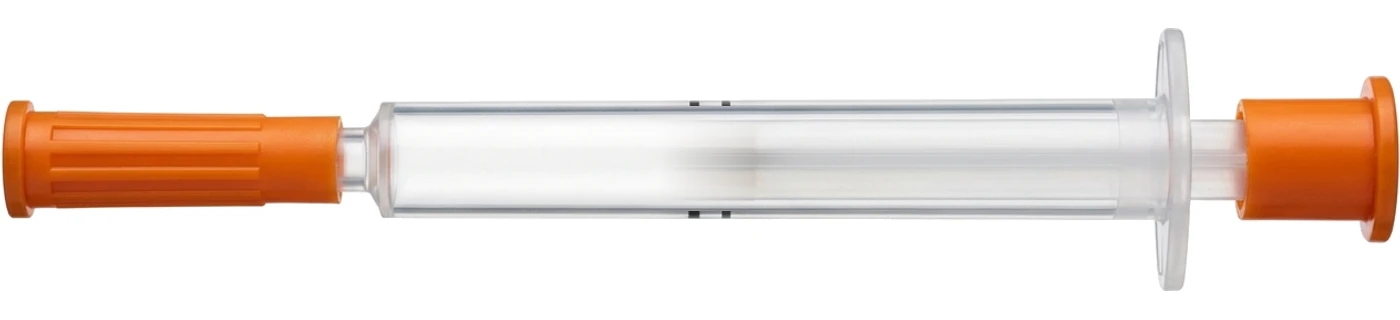
50 mcg per U-100 unit at this mix.
How many vials do I need?
Duration
Schedule
12 Vials + 1 x 10mL Bacteriostatic Water Needed
View Verified UK Supplier (12 Vials Required) ->MOTS-c Protocol Timeline & Stacking Guide
Metabolic papers on MOTS-c often report readouts across several weeks rather than a single day.
Week 1–2: Starting phase
Record the vial mass, the water volume, and the mcg per unit before the first draw.
Week 3–4: Steady phase
Hold the worked amount steady unless the paper you are following changes it.
Week 5–8: Full protocol window
A full window for MOTS-c is 8 weeks at twice weekly.
Post-cycle rest window
Longer published windows often reach week 12. Recalculate vials in the planner before extending.
What Is MOTS-c? Mechanism & Biological Pathways
Primary focus
Mitochondrial & metabolic
Biological target
AMPK-linked mitochondrial energy assays.
Typical half-life
Published pharmacokinetic reports describe a half-life of several hours in the models studied.
- What it is. 16-amino-acid mitochondrial ORF peptide, commonly written MRWQEMGYIFYPRKLR.
- Where papers look. AMPK-linked mitochondrial energy assays.
- In plain words. MOTS-c is encoded in mitochondrial DNA and studied in AMPK-linked energy assays. It is grouped with SS-31 and NAD+ because each one is used to read a different part of mitochondrial metabolism.
How to Reconstitute & Store MOTS-c (2°C–8°C UK Fridge)
MOTS-c Reconstitution Maths: 10 mg with 2 mL
Step 1: strength per mL
10 mg ÷ 2 mL = 5 mg/mL
Step 2: amount per syringe unit
5 mg/mL ÷ 100 units = 50 mcg per unit
Step 3: units for the worked target
2000 mcg ÷ 50 mcg/unit = 40 units
MOTS-c Purity & Quality Checklist
99%+ HPLC purity
Ask for the analytical sheet, not only the label.
TFA counter-ion removal
Leftover trifluoroacetate is weighed in the cake, so the peptide mass can be lower than the label.
0.9% benzyl alcohol solution
Use 0.9% benzyl alcohol solution for later draws from the same vial. Plain sterile water suits a single immediate use.
Cold-protected storage
Keep the dry vial and the mixed vial at 2°C–8°C, upright and out of bright light.
MOTS-c Research Compendium
Chemistry and structure
MOTS-c has this structural description: 16-amino-acid mitochondrial ORF peptide, commonly written MRWQEMGYIFYPRKLR. The molecular formula is C101H152N28O22S2. The molecular weight is 2174.6 g/mol. The CAS registry number is 1627580-64-6. PubChem compound 146675088 matches that formula. Usual laboratory vials pair 10 mg with 2 mL, 40 mg with 3 mL of 0.9% benzyl alcohol bacteriostatic solution. Concentration is the vial mass divided by that volume. Literature also uses the names MOTS c, mitochondrial ORF.
Mechanism and receptor pathways
MOTS-c is followed in laboratory work on AMPK-linked mitochondrial energy assays. MOTS-c is encoded in mitochondrial DNA and studied in AMPK-linked energy assays. It is grouped with SS-31 and NAD+ because each one is used to read a different part of mitochondrial metabolism. Observation windows described in the source papers: Metabolic papers on MOTS-c often report readouts across several weeks rather than a single day. Reported half-life: Published pharmacokinetic reports describe a half-life of several hours in the models studied. Sequences commonly studied alongside MOTS-c include SS-31 (SS-31 is studied at the inner mitochondrial membrane); NAD+ (NAD+ is the redox cofactor measured alongside mitochondrial peptides).
Published literature findings
Zheng Y and colleagues (2023) published "MOTS-c: A promising mitochondrial-derived peptide for therapeutic exploitation" in Frontiers in endocrinology. That scientific review is cited for MOTS-c as PMID 36761202. Lee C and colleagues (2015) published "The mitochondrial-derived peptide MOTS-c promotes metabolic homeostasis and reduces obesity and insulin resistance" in Cell metabolism. That preclinical model is cited for MOTS-c as PMID 25738459. Yin Y and colleagues (2024) published "Mitochondrial-Derived Peptide MOTS-c Suppresses Ovarian Cancer Progression by Attenuating USP7-Mediated LARS1 Deubiquitination" in Advanced science (Weinheim, Baden-Wurttemberg, Germany). That preclinical model is cited for MOTS-c as PMID 39321430. Reynolds JC and colleagues (2021) published "MOTS-c is an exercise-induced mitochondrial-encoded regulator of age-dependent physical decline and muscle homeostasis" in Nature communications. That preclinical model is cited for MOTS-c as PMID 33473109. Yin Y and colleagues (2022) published "The mitochondrial-derived peptide MOTS-c relieves hyperglycemia and insulin resistance in gestational diabetes mellitus" in Pharmacological research. That preclinical model is cited for MOTS-c as PMID 34798268. Kim KH and colleagues (2018) published "The Mitochondrial-Encoded Peptide MOTS-c Translocates to the Nucleus to Regulate Nuclear Gene Expression in Response to Metabolic Stress" in Cell metabolism. That preclinical model is cited for MOTS-c as PMID 29983246.
Storage and reconstitution science
Lyophilised MOTS-c is stored at 2°C–8°C for 12–24 months, upright and away from bright light. After the diluent is added, the same refrigerator band applies. The vial is swirled until the cake clears, and it is not shaken, because foam hides the meniscus. MOTS-c is reconstituted in 0.9% benzyl alcohol bacteriostatic solution so later draws from the same stopper stay defined. Plain sterile water suits a single immediate use rather than a multi-draw vial. A 10 mg vial in 2 mL is 5 mg/mL, equal to 50 mcg per U-100 unit, so 2000 mcg measures 40 units (0.4 mL). A laboratory rhythm often paired with that arithmetic is twice weekly across 8 weeks. Reconstituted solution kept at 2°C–8°C is generally used within 28 days.
MOTS-c Dosage & Reconstitution FAQs
How much bacteriostatic water do you mix with a 10 mg MOTS-c vial?
Mix a 10 mg MOTS-c vial with 2 mL of bacteriostatic water (0.9% benzyl alcohol). That gives 5 mg/mL, or 50 mcg on each unit of a U-100 syringe. Other vial masses use their own volumes: 40 mg uses 3 mL.
How many units on a U-100 syringe is 2000 mcg of MOTS-c?
With 2 mL in a 10 mg MOTS-c vial, 2000 mcg is 40 units (0.4 mL) on a U-100 syringe. One unit is always 0.01 mL. A mark past 100 units needs a larger reconstitution volume or two draws.
How long does reconstituted MOTS-c last in a UK fridge at 2°C–8°C?
Reconstituted MOTS-c is kept at 2°C–8°C and is generally used within 28 days. The dry cake is stored in that same refrigerator for 12–24 months, upright and out of bright light. Swirl the vial to clear the cake. The diluent is bacteriostatic water. Published pharmacokinetic reports describe a half-life of several hours in the models studied.
What is the molecular weight, formula, and structure of MOTS-c?
MOTS-c has a molecular weight of 2174.6 g/mol. The molecular formula is C101H152N28O22S2. CAS 1627580-64-6. Structure: 16-amino-acid mitochondrial ORF peptide, commonly written MRWQEMGYIFYPRKLR.
Which compounds are commonly studied alongside MOTS-c?
SS-31: SS-31 is studied at the inner mitochondrial membrane NAD+: NAD+ is the redox cofactor measured alongside mitochondrial peptides
MOTS-c Published PubMed Studies
Scientific Review · PMID: 36761202 · Frontiers in endocrinology · 2023
Zheng Y and colleagues (2023, Frontiers in endocrinology) report a scientific review examining MOTS-c: A promising mitochondrial-derived peptide for therapeutic exploitation. The MOTS-c citation is PMID 36761202.
Zheng Y, Wei Z, Wang T. MOTS-c: A promising mitochondrial-derived peptide for therapeutic exploitation.
Preclinical Model · PMID: 25738459 · Cell metabolism · 2015
Lee C and colleagues (2015, Cell metabolism) report a preclinical model examining The mitochondrial-derived peptide MOTS-c promotes metabolic homeostasis and reduces obesity and insulin resistance. The MOTS-c citation is PMID 25738459.
Lee C, Zeng J, Drew BG et al.. The mitochondrial-derived peptide MOTS-c promotes metabolic homeostasis and reduces obesity and insulin resistance.
Preclinical Model · PMID: 39321430 · Advanced science (Weinheim, Baden-Wurttemberg, Germany) · 2024
Yin Y and colleagues (2024, Advanced science (Weinheim, Baden-Wurttemberg, Germany)) report a preclinical model examining Mitochondrial-Derived Peptide MOTS-c Suppresses Ovarian Cancer Progression by Attenuating USP7-Mediated LARS1 Deubiquitination. The MOTS-c citation is PMID 39321430.
Yin Y, Li Y, Ma B et al.. Mitochondrial-Derived Peptide MOTS-c Suppresses Ovarian Cancer Progression by Attenuating USP7-Mediated LARS1 Deubiquitination.
Preclinical Model · PMID: 33473109 · Nature communications · 2021
Reynolds JC and colleagues (2021, Nature communications) report a preclinical model examining MOTS-c is an exercise-induced mitochondrial-encoded regulator of age-dependent physical decline and muscle homeostasis. The MOTS-c citation is PMID 33473109.
Reynolds JC, Lai RW, Woodhead JST et al.. MOTS-c is an exercise-induced mitochondrial-encoded regulator of age-dependent physical decline and muscle homeostasis.
Preclinical Model · PMID: 34798268 · Pharmacological research · 2022
Yin Y and colleagues (2022, Pharmacological research) report a preclinical model examining The mitochondrial-derived peptide MOTS-c relieves hyperglycemia and insulin resistance in gestational diabetes mellitus. The MOTS-c citation is PMID 34798268.
Yin Y, Pan Y, He J et al.. The mitochondrial-derived peptide MOTS-c relieves hyperglycemia and insulin resistance in gestational diabetes mellitus.
Preclinical Model · PMID: 29983246 · Cell metabolism · 2018
Kim KH and colleagues (2018, Cell metabolism) report a preclinical model examining The Mitochondrial-Encoded Peptide MOTS-c Translocates to the Nucleus to Regulate Nuclear Gene Expression in Response to Metabolic Stress. The MOTS-c citation is PMID 29983246.
Kim KH, Son JM, Benayoun BA et al.. The Mitochondrial-Encoded Peptide MOTS-c Translocates to the Nucleus to Regulate Nuclear Gene Expression in Response to Metabolic Stress.
Related protocol guides
Who produced this, how, and why
1. Who produced this information
Compiled by the Peptide Dosing UK Editorial & Analytical Review Desk — an independent UK scientific reference group dedicated to accurate metric dilution tables and plain UK English literature summaries.
2. How every number is calculated
All dosage charts use deterministic U-100 volumetric maths (1.00 mL = 100 Units on a standard U-100 syringe), USP <51> / <797> multi-draw preservation standards (0.9% benzyl alcohol), and study amounts cross-checked against peer-reviewed papers indexed in NCBI PubMed, Europe PMC (EMBL-EBI Cambridge, UK), NIH PubChem, and ClinicalTrials.gov.
3. Why this portal exists
Many UK readers end up guessing reconstitution maths from conflicting forum threads or US charts. We built Peptide Dosing UK to provide a free, verifiable mathematical reference and study summary in plain UK English.