Educational & Mathematical Reference Only · Not Medical Advice
BPC-157 (5mg Vial) Dosage Protocol
BPC-157 is studied in laboratory work on cell-migration assays, growth-factor signalling, and nitric-oxide pathways. This reconstitution guide shows how much liquid to add to the vial, and which U-100 syringe mark matches a worked amount.
Jump to Section (1–11)
BPC-157 Quick Reference: Vial, Water & Concentration
Vial strength
5 mg freeze-dried powder
Bacteriostatic water to add
2 mL (0.9% benzyl alcohol solution)
Resulting concentration
2.5 mg/mL (25 mcg per 1 U-100 unit)
Typical schedule and storage
Once Daily · Store at 2°C–8°C in a standard UK fridge
BPC-157 Dosage Chart: U-100 Syringe Units (5 mg Vial)
Mixing a 5 mg BPC-157 vial with 2 mL of bacteriostatic water produces a concentration of 2.5 mg/mL (25 mcg per U-100 unit). On a standard 100-unit (1.0 mL) syringe, a 250 mcg draw equals 10 units (0.1 mL), giving 20 total draws per vial.
| Target amount | Solution volume | 100-unit (1.0 mL) syringe mark | 50-unit (0.5 mL) syringe mark | 30-unit (0.3 mL) syringe mark | Draws per vial |
|---|---|---|---|---|---|
| 100 mcg (0.1 mg) | 0.04 mL | 4 units | 4 units | 4 units | 50 |
| 250 mcg (0.25 mg) | 0.1 mL | 10 units | 10 units | 10 units | 20 |
| 300 mcg (0.3 mg) | 0.12 mL | 12 units | 12 units | 12 units | 16.7 |
| 500 mcg (0.5 mg) | 0.2 mL | 20 units | 20 units | 20 units | 10 |
| 1000 mcg (1 mg) | 0.4 mL | 40 units | 40 units | Exceeds 30-unit barrel | 5 |
| 2000 mcg (2 mg) | 0.8 mL | 80 units | Exceeds 50-unit barrel | Exceeds 30-unit barrel | 2.5 |
| 2500 mcg (2.5 mg) | 1 mL | 100 units | Exceeds 50-unit barrel | Exceeds 30-unit barrel | 2 |
| 5000 mcg (5 mg) | 2 mL | Exceeds 100-unit barrel | Exceeds 50-unit barrel | Exceeds 30-unit barrel | 1 |
Equilibrate the vial to room temperature
Take the lyophilised vial out of the refrigerator and let it sit until the glass is no longer cold. Opening a cold vial pulls moist air inside.
Draw the reconstitution liquid
Draw 2 mL of bacteriostatic reconstitution solution (0.9% benzyl alcohol) into a sterile syringe.
Angle the stream against the glass wall
Aim the liquid down the inside wall of the vial. A direct stream onto the powder drives foam into the solution and makes the meniscus hard to read.
Swirl gently and store at 2°C–8°C
Roll the vial between your palms until the powder has dissolved. Do not shake it. Return the reconstituted vial to a standard UK refrigerator at 2°C–8°C.
BPC-157 Reconstitution Supplies & UK Suppliers
Peptide and mixing solution
- BPC-157, 5 mg
- Bacteriostatic reconstitution solution, 10 mL
Syringe selection
- U-100 1.0 mL, 0.5 mL, or 0.3 mL barrel
- Worked example: 10 units
Alcohol swabs and hygiene
- 70% isopropyl sterile prep swabs
- Wipe the stopper before each draw
Full-protocol vial quantity
- 8 weeks at once daily rounds up to whole 5 mg vials
- Plus 1 x 10 mL of mixing solution
BPC-157
5 mg, 10 mg, 15 mg
99%+ HPLC Verified · UK Dispatch
Bacteriostatic reconstitution solution, 10 mL
0.9% benzyl alcohol, multi-draw solution.
U-100 1.0 mL / 0.5 mL fine-gauge syringes
Sterile graduated barrels.
70% isopropyl sterile alcohol prep swabs
Foil sachets for the stopper.
1L yellow sharps disposal bin
BS EN ISO 23907 Compliant Safe Disposal
Interactive BPC-157 Dosage & Syringe Calculator
Step 1: Choose Vial Size (mg)
Step 2: Choose Bacteriostatic Water Added (mL)
Step 3: Choose Your Target Draw and Syringe Barrel
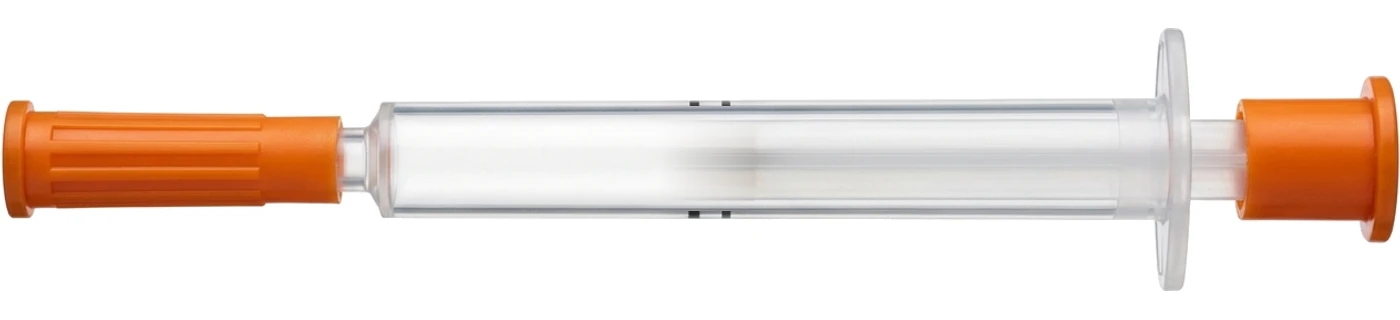
Pull Syringe Plunger to 10 Units (0.1 mL)
25 mcg per U-100 unit at this mix.
How many vials do I need?
Duration
Schedule
3 Vials + 1 x 10mL Bacteriostatic Water Needed
View Verified UK Supplier (3 Vials Required) ->BPC-157 Protocol Timeline & Stacking Guide
Cited cell and animal-model papers often report early readouts inside two weeks and later readouts between four and eight weeks.
Week 1–2: Starting phase
Record the vial mass, the water volume, and the mcg per unit before the first draw.
Week 3–4: Steady phase
Hold the worked amount steady unless the paper you are following changes it.
Week 5–8: Full protocol window
A full window for BPC-157 is 8 weeks at once daily.
Post-cycle rest window
Longer published windows often reach week 12. Recalculate vials in the planner before extending.
What Is BPC-157? Mechanism & Biological Pathways
Primary focus
Tissue & recovery
Biological target
Cell-migration assays, growth-factor signalling, and nitric-oxide pathways.
Typical half-life
Published pharmacokinetic notes describe a short plasma half-life, often under 30 minutes.
- What it is. Pentadecapeptide GEPPPGKPADDAGLV, a partial sequence related to a gastric protein.
- Where papers look. Cell-migration assays, growth-factor signalling, and nitric-oxide pathways.
- In plain words. BPC-157 is a 15-amino-acid chain studied in cell-migration and cytoskeletal assays. Papers describe changes in growth-factor signalling and nitric-oxide pathways in laboratory models, which is why it shows up beside actin-binding sequences in the same experiment.
How to Reconstitute & Store BPC-157 (2°C–8°C UK Fridge)
BPC-157 Reconstitution Maths: 5 mg with 2 mL
Step 1: strength per mL
5 mg ÷ 2 mL = 2.5 mg/mL
Step 2: amount per syringe unit
2.5 mg/mL ÷ 100 units = 25 mcg per unit
Step 3: units for the worked target
250 mcg ÷ 25 mcg/unit = 10 units
BPC-157 Purity & Quality Checklist
99%+ HPLC purity
Ask for the analytical sheet, not only the label.
TFA counter-ion removal
Leftover trifluoroacetate is weighed in the cake, so the peptide mass can be lower than the label.
0.9% benzyl alcohol solution
Use 0.9% benzyl alcohol solution for later draws from the same vial. Plain sterile water suits a single immediate use.
Cold-protected storage
Keep the dry vial and the mixed vial at 2°C–8°C, upright and out of bright light.
BPC-157 Research Compendium
Chemistry and structure
BPC-157 has this structural description: Pentadecapeptide GEPPPGKPADDAGLV, a partial sequence related to a gastric protein. The molecular formula is C62H98N16O22. The molecular weight is 1419.5 g/mol. The CAS registry number is 137525-51-0. PubChem compound 9941957 matches that formula. Usual laboratory vials pair 5 mg with 2 mL, 10 mg with 5 mL, 15 mg with 5 mL of 0.9% benzyl alcohol bacteriostatic solution. Concentration is the vial mass divided by that volume. Literature also uses the names BPC157, pentadecapeptide, body protection compound.
Mechanism and receptor pathways
BPC-157 is followed in laboratory work on Cell-migration assays, growth-factor signalling, and nitric-oxide pathways. BPC-157 is a 15-amino-acid chain studied in cell-migration and cytoskeletal assays. Papers describe changes in growth-factor signalling and nitric-oxide pathways in laboratory models, which is why it shows up beside actin-binding sequences in the same experiment. Observation windows described in the source papers: Cited cell and animal-model papers often report early readouts inside two weeks and later readouts between four and eight weeks. Reported half-life: Published pharmacokinetic notes describe a short plasma half-life, often under 30 minutes. Sequences commonly studied alongside BPC-157 include TB-500 (Thymosin beta-4 is studied for actin binding, a different readout from BPC-157 cell migration); GHK-Cu (GHK-Cu is studied in matrix and collagen models alongside the two recovery sequences).
Published literature findings
Lee E and colleagues (2021) published "Intra-Articular Injection of BPC 157 for Multiple Types of Knee Pain" in Alternative therapies in health and medicine. That preclinical model is cited for BPC-157 as PMID 34324435. Chang CH and colleagues (2011) published "The promoting effect of pentadecapeptide BPC 157 on tendon healing involves tendon outgrowth, cell survival, and cell migration" in Journal of applied physiology (Bethesda, Md. : 1985). That preclinical model is cited for BPC-157 as PMID 21030672. McGuire FP and colleagues (2025) published "Regeneration or Risk? A Narrative Review of BPC-157 for Musculoskeletal Healing" in Current reviews in musculoskeletal medicine. That scientific review is cited for BPC-157 as PMID 40789979. Vukojevic J and colleagues (2022) published "Pentadecapeptide BPC 157 and the central nervous system" in Neural regeneration research. That scientific review is cited for BPC-157 as PMID 34380875. Staresinic M and colleagues (2022) published "Stable Gastric Pentadecapeptide BPC 157 and Striated, Smooth, and Heart Muscle" in Biomedicines. That scientific review is cited for BPC-157 as PMID 36551977. Sikiric P and colleagues (2022) published "Cytoprotective gastric pentadecapeptide BPC 157 resolves major vessel occlusion disturbances, ischemia-reperfusion injury following Pringle maneuver, and Budd-Chiari syndrome" in World journal of gastroenterology. That preclinical model is cited for BPC-157 as PMID 35125818.
Storage and reconstitution science
Lyophilised BPC-157 is stored at 2°C–8°C for 12–24 months, upright and away from bright light. After the diluent is added, the same refrigerator band applies. The vial is swirled until the cake clears, and it is not shaken, because foam hides the meniscus. BPC-157 is reconstituted in 0.9% benzyl alcohol bacteriostatic solution so later draws from the same stopper stay defined. Plain sterile water suits a single immediate use rather than a multi-draw vial. A 5 mg vial in 2 mL is 2.5 mg/mL, equal to 25 mcg per U-100 unit, so 250 mcg measures 10 units (0.1 mL). A laboratory rhythm often paired with that arithmetic is once daily across 8 weeks. Reconstituted solution kept at 2°C–8°C is generally used within 28 days.
BPC-157 Dosage & Reconstitution FAQs
How much bacteriostatic water do you mix with a 5 mg BPC-157 vial?
Mix a 5 mg BPC-157 vial with 2 mL of bacteriostatic water (0.9% benzyl alcohol). That gives 2.5 mg/mL, or 25 mcg on each unit of a U-100 syringe. Other vial masses use their own volumes: 10 mg uses 5 mL; 15 mg uses 5 mL.
How many units on a U-100 syringe is 250 mcg of BPC-157?
With 2 mL in a 5 mg BPC-157 vial, 250 mcg is 10 units (0.1 mL) on a U-100 syringe. One unit is always 0.01 mL. A mark past 100 units needs a larger reconstitution volume or two draws.
How long does reconstituted BPC-157 last in a UK fridge at 2°C–8°C?
Reconstituted BPC-157 is kept at 2°C–8°C and is generally used within 28 days. The dry cake is stored in that same refrigerator for 12–24 months, upright and out of bright light. Swirl the vial to clear the cake. The diluent is bacteriostatic water. Published pharmacokinetic notes describe a short plasma half-life, often under 30 minutes.
What is the molecular weight, formula, and structure of BPC-157?
BPC-157 has a molecular weight of 1419.5 g/mol. The molecular formula is C62H98N16O22. CAS 137525-51-0. Structure: Pentadecapeptide GEPPPGKPADDAGLV, a partial sequence related to a gastric protein.
Which compounds are commonly studied alongside BPC-157?
TB-500: Thymosin beta-4 is studied for actin binding, a different readout from BPC-157 cell migration GHK-Cu: GHK-Cu is studied in matrix and collagen models alongside the two recovery sequences
BPC-157 Published PubMed Studies
Preclinical Model · PMID: 34324435 · Alternative therapies in health and medicine · 2021
Lee E and colleagues (2021, Alternative therapies in health and medicine) report a preclinical model examining Intra-Articular Injection of BPC 157 for Multiple Types of Knee Pain. The BPC-157 citation is PMID 34324435.
Lee E, Padgett B. Intra-Articular Injection of BPC 157 for Multiple Types of Knee Pain.
Preclinical Model · PMID: 21030672 · Journal of applied physiology (Bethesda, Md. : 1985) · 2011
Chang CH and colleagues (2011, Journal of applied physiology (Bethesda, Md. : 1985)) report a preclinical model examining The promoting effect of pentadecapeptide BPC 157 on tendon healing involves tendon outgrowth, cell survival, and cell migration. The BPC-157 citation is PMID 21030672.
Chang CH, Tsai WC, Lin MS et al.. The promoting effect of pentadecapeptide BPC 157 on tendon healing involves tendon outgrowth, cell survival, and cell migration.
Scientific Review · PMID: 40789979 · Current reviews in musculoskeletal medicine · 2025
McGuire FP and colleagues (2025, Current reviews in musculoskeletal medicine) report a scientific review examining Regeneration or Risk? A Narrative Review of BPC-157 for Musculoskeletal Healing. The BPC-157 citation is PMID 40789979.
McGuire FP, Martinez R, Lenz A et al.. Regeneration or Risk? A Narrative Review of BPC-157 for Musculoskeletal Healing.
Scientific Review · PMID: 34380875 · Neural regeneration research · 2022
Vukojevic J and colleagues (2022, Neural regeneration research) report a scientific review examining Pentadecapeptide BPC 157 and the central nervous system. The BPC-157 citation is PMID 34380875.
Vukojevic J, Milavić M, Perović D et al.. Pentadecapeptide BPC 157 and the central nervous system.
Scientific Review · PMID: 36551977 · Biomedicines · 2022
Staresinic M and colleagues (2022, Biomedicines) report a scientific review examining Stable Gastric Pentadecapeptide BPC 157 and Striated, Smooth, and Heart Muscle. The BPC-157 citation is PMID 36551977.
Staresinic M, Japjec M, Vranes H et al.. Stable Gastric Pentadecapeptide BPC 157 and Striated, Smooth, and Heart Muscle.
Preclinical Model · PMID: 35125818 · World journal of gastroenterology · 2022
Sikiric P and colleagues (2022, World journal of gastroenterology) report a preclinical model examining Cytoprotective gastric pentadecapeptide BPC 157 resolves major vessel occlusion disturbances, ischemia-reperfusion injury following Pringle maneuver, and Budd-Chiari syndrome. The BPC-157 citation is PMID 35125818.
Sikiric P, Skrtic A, Gojkovic S et al.. Cytoprotective gastric pentadecapeptide BPC 157 resolves major vessel occlusion disturbances, ischemia-reperfusion injury following Pringle maneuver, and Budd-Chiari syndrome.
Related protocol guides
Who produced this, how, and why
1. Who produced this information
Compiled by the Peptide Dosing UK Editorial & Analytical Review Desk — an independent UK scientific reference group dedicated to accurate metric dilution tables and plain UK English literature summaries.
2. How every number is calculated
All dosage charts use deterministic U-100 volumetric maths (1.00 mL = 100 Units on a standard U-100 syringe), USP <51> / <797> multi-draw preservation standards (0.9% benzyl alcohol), and study amounts cross-checked against peer-reviewed papers indexed in NCBI PubMed, Europe PMC (EMBL-EBI Cambridge, UK), NIH PubChem, and ClinicalTrials.gov.
3. Why this portal exists
Many UK readers end up guessing reconstitution maths from conflicting forum threads or US charts. We built Peptide Dosing UK to provide a free, verifiable mathematical reference and study summary in plain UK English.